
7 Smart Business Loans for Manufacturers That Need Capital Fast

Business loans for manufacturers can help companies manage cash flow, purchase equipment, cover payroll, buy materials, finance receivables, and expand production capacity. Manufacturing companies often carry high operating costs before revenue is collected. Raw materials, labor, machinery, rent, freight, and vendor payments can all come due before customer invoices are paid.
That timing gap is why the right loan structure matters. A manufacturer does not always need the largest loan available. The better option is usually the funding product that matches the use of funds, repayment timeline, and cash flow cycle.
In this Article
Business Loans for Manufacturers: What They Are Used For
Business loans for manufacturers are financing options used to support production, operations, equipment purchases, facility needs, and cash flow. Common uses include buying machinery, covering payroll, purchasing raw materials, managing unpaid invoices, financing warehouse space, and supporting larger purchase orders.
Manufacturers often need funding because their expenses can occur well before payment is received. A company may need to buy materials, pay workers, produce goods, ship products, and then wait 30, 60, or 90 days for customer payment. Financing can help bridge that gap when internal cash reserves are not enough.
A strong manufacturing loan strategy starts with one question: what will the funds be used for? That answer usually determines the best type of financing.
Working Capital Business Loans for Manufacturers
Working capital loans are used for everyday operating expenses. For manufacturers, that may include payroll, raw materials, packaging, utilities, supplier payments, freight, insurance, rent, or short-term production costs.
This type of financing can be useful when a company has strong orders but limited available cash. It may also help during seasonal slowdowns, delayed customer payments, or periods when material costs rise faster than expected.
Working capital financing is usually best for short-term needs. It should not be used as a long-term substitute for stable margins or proper cash flow planning.
Common uses include:
- Payroll and labor costs
- Raw materials and supplies
- Vendor payments
- Packaging and shipping
- Temporary cash flow gaps
- Production costs tied to customer orders
Equipment Financing for Manufacturers
Equipment financing helps manufacturers purchase or lease machinery, vehicles, production systems, technology, or other business assets. It can be used for new equipment, replacement equipment, or upgrades that support output and efficiency.
For manufacturing companies, equipment is often tied directly to revenue. A machine that increases production speed, reduces downtime, or expands product capability can affect the company’s ability to fulfill orders.
Equipment financing may help reduce the need for a large upfront cash payment. Instead of paying the full cost immediately, the business can spread payments over time.
The IRS states that Section 179 allows business taxpayers to deduct the cost of certain property as an expense when the property is first placed in service, subject to limits and rules. Manufacturers considering equipment purchases should review IRS Section 179 deduction information with a qualified tax professional before making tax decisions
Best-fit uses include:
- CNC machines
- Production equipment
- Packaging systems
- Forklifts and material handling equipment
- Commercial vehicles
- Manufacturing software and technology
- Replacement of outdated equipment
Accounts Receivable Financing for Manufacturers
Accounts receivable financing allows manufacturers to access capital based on unpaid customer invoices. This can be useful when products have already been delivered, but payment has not yet been collected.
Many manufacturers sell to businesses that pay on net terms. That delay can create pressure when the next production run requires materials, labor, and overhead before the previous invoice is paid.
Accounts receivable financing can help turn unpaid invoices into working capital. It is often used by manufacturers with reliable commercial customers, recurring invoices, and payment delays that affect cash flow.
Common uses include:
- Funding the next production run
- Covering payroll while invoices are outstanding
- Paying suppliers before customer payments arrive
- Accepting larger customer orders
- Managing long invoice cycles
- Supporting cash flow without waiting for receivables
Business Line of Credit for Manufacturing Expenses
A business line of credit gives manufacturers access to funds that can be drawn as needed. Unlike a term loan, the business does not have to use the full approved amount at once.
This can be useful for recurring or unpredictable expenses. Manufacturers may use a line of credit for rush orders, supplier deposits, temporary payroll needs, repairs, inventory gaps, or freight costs.
A line of credit works best when the business needs flexible access to capital rather than a single lump-sum loan. It can also help companies handle timing issues between production expenses and incoming revenue.
Good uses for a manufacturing line of credit include:
- Supplier deposits
- Short-term inventory needs
- Equipment repairs
- Freight and logistics costs
- Seasonal production swings
- Emergency expenses
Commercial Real Estate Loans for Manufacturing Facilities
Commercial real estate financing may help manufacturers buy, refinance, or improve business-use property. This can include production facilities, warehouses, distribution buildings, mixed-use industrial space, storage yards, or office space tied to operations.
This type of financing is usually tied to a larger long-term need. A manufacturer may consider real estate financing when leasing limits growth, warehouse space is too small, or owning property supports the company’s operating plan.
The SBA 504 loan program provides long-term, fixed-rate financing for major fixed assets that promote business growth and job creation. The SBA states that 504 loans may be used for major fixed assets, with a maximum loan amount of $5.5 million.
Common uses include:
- Buying a manufacturing facility
- Expanding warehouse space
- Refinancing commercial property debt
- Improving an existing building
- Purchasing owner-occupied industrial space
SBA Loans for Manufacturers
SBA loans may be available to eligible manufacturers that meet lender and SBA requirements. These loans can support larger business needs, including equipment, working capital, real estate, refinancing, and expansion.
The SBA lists several eligible uses for 7(a) loan proceeds, including short-term and long-term working capital, refinancing current business debt, purchasing and installing machinery and equipment, and acquiring or improving real estate and buildings.
SBA financing is not always the fastest option. Documentation and underwriting may take longer than some alternative business financing products. However, SBA loans may be worth considering when the manufacturer needs structured financing for a larger or longer-term project.
Potential SBA loan uses for manufacturers include:
- Purchasing machinery
- Expanding production facilities
- Refinancing eligible business debt
- Buying owner-occupied real estate
- Funding working capital
- Acquiring another business
The best loan depends on the reason for borrowing. A manufacturer buying machinery may need equipment financing. A company waiting on invoices may need accounts receivable financing. A business preparing for seasonal demand may need working capital or a line of credit.
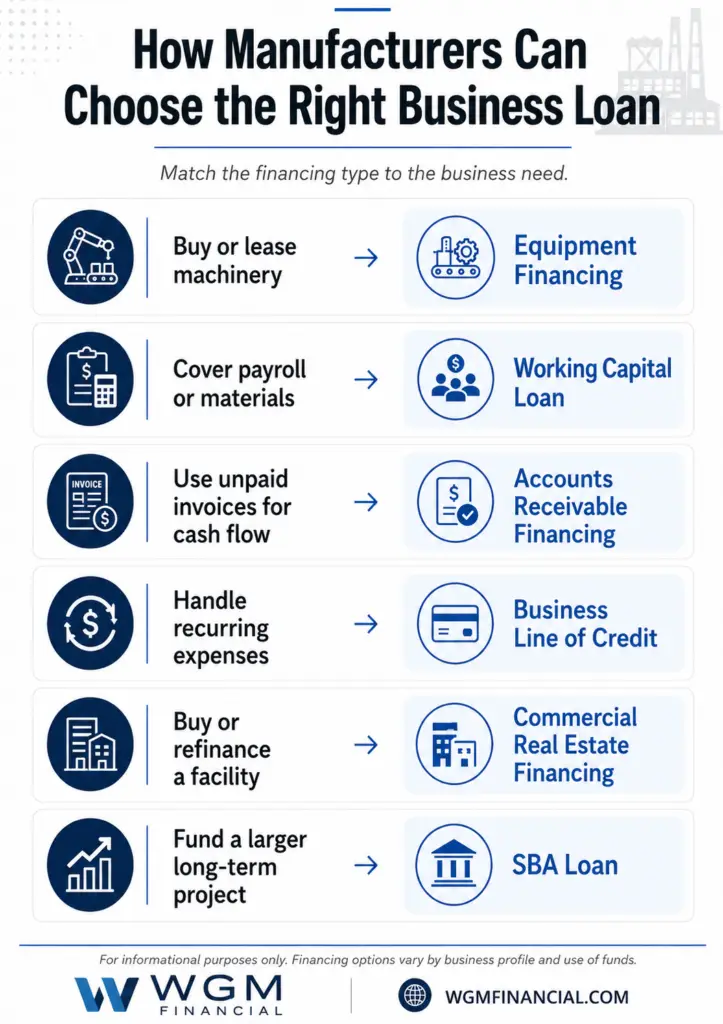
Before applying, manufacturers should review revenue, current debt, bank statements, open invoices, equipment quotes, tax returns, and the specific use of funds. A clear funding purpose can make the application easier to evaluate.
What are business loans for manufacturers?
Business loans for manufacturers are financing options used to support production, cash flow, equipment purchases, facility needs, inventory, payroll, and growth projects.
What is the best loan for buying manufacturing equipment?
Equipment financing is often used when the main need is to buy or lease machinery, production systems, vehicles, or other tangible business assets.
Can manufacturers use unpaid invoices to get financing?
Yes. Accounts receivable financing may allow manufacturers to access capital based on unpaid customer invoices.
Can a manufacturer use financing for payroll?
Yes. Working capital loans, lines of credit, and some SBA loans may be used for payroll, depending on the loan type and lender requirements.
Are SBA loans available for manufacturers?
SBA loans may be available to eligible manufacturers that meet SBA and lender requirements. SBA 7(a) loans can be used for several business purposes, including working capital, equipment, debt refinancing, and real estate
What documents may manufacturers need to apply?
Common documents may include business bank statements, tax returns, financial statements, equipment quotes, invoices, accounts receivable aging reports, and a clear explanation of how the funds will be used.
Compare Business Loans for Manufacturers
Manufacturers need financing that fits how production works. The right loan can help cover materials, equipment, receivables, payroll, property, or expansion without forcing the business into the wrong structure.
Review available loan options for your manufacturing company and choose the funding path that matches your business need.

Healthcare Equipment Financing Doesn’t Always Cover the Whole Project

SBA Loans for Healthcare Practice Acquisitions: What Changes October 1, 2026

How Medicare Payment Changes Can Create New Working Capital Needs for Medical Practices

ASC Working Capital: Why Payment Increases Still Require Cash Flow Planning

Business Loan Readiness Checklist: How to Prepare Before Applying in 2026

7 Smart Business Loans for Manufacturers That Need Capital Fast
About wgmfinancial.com
wgmfinancial.com is a U.S. healthcare business financing resource and loan portal operated by WGM Direct Marketing, LLC d/b/a WGM Financial. The portal helps business owners review funding options based on business need, use of funds, funding timeline, and repayment ability.
Financing options may include working capital loans, business lines of credit, equipment financing, accounts receivable financing, SBA loans, commercial real estate financing, healthcare business loans, trucking business loans, manufacturing financing, and other small business funding options.
wgmfinancial.com is not a lender. Financing options are subject to lender review, underwriting, borrower qualifications, documentation requirements, and final approval.